
Written by Heather Cole, September 18th 2025
It’s budget season. Spreadsheets are multiplying, calendar invites are stacking up, and your finance team is sprinting toward deadlines. But here’s a hard truth: if your people don’t believe the story behind the numbers, your direction and your why, they won’t follow the plan. Budgets and forecasts become performative exercises when the narrative is missing. And in 2025, when engagement is wobbling and execution is harder than ever, alignment isn’t a “nice to have”, it’s the lever that moves results. Harvard Business Review
The Engagement Alarm Bell is Ringing
Employee engagement in the U.S. fell to a 10-year low in 2024: only 31% of employees were engaged, while 17% were actively disengaged, according to Gallup. Globally, engagement dipped as well. That disengagement isn’t just a morale issue. It’s an economic one. If you’re presenting a budget without a compelling story that connects people to purpose, that energizes your team to think creatively, you’re competing with a powerful headwind. Gallup.com+2Gallup.com+2
And please don’t say disengagement is a result of people working remote! For over 20 years I have successfully led a virtual company. Initially many companies questioned if we were a “real” company. Then they engaged with our team and asked how we did it. The answer is “Alignment!” Our team knows our mission, and they know our values. This is the foundation of every corporate story.
Strategy Without Belief Stalls in Execution
We don’t struggle because we lack ideas; we struggle because people don’t understand or buy into them. Harvard Business Review has noted for years that a large share of strategies fail in execution—studies put the number between 60% and 90%. . Harvard Business Review In practice, that means teams leave planning meetings nodding, then revert to the whirlwind of day-to-day operations because the WHY and the HOW never became real for them
McKinsey’s research echoes this: about 70% of change programs fail to achieve their goals, often due to employee resistance or insufficient support. McKinsey & Company Translation: if the story doesn’t land, the plan doesn’t progress.
“People don’t buy what you do; they buy why you do it.”
Simon Sinek’s famous line is over-quoted because it’s true. People commit when they understand the reason, when the budget is a vehicle for meaning, not just math. During budget season, leaders should repeatedly connect dollars to direction: “Here’s where we’re going, why it matters, and how this plan helps us win.” (If you want a refresher on the underlying model, Sinek’s “Golden Circle” is a useful primer.) Simon Sinek
Budget Season is Your Best Chance to Align the Enterprise
Alignment isn’t a one-time offsite; it’s an every-quarter muscle. HBR reminds leaders that simply communicating a strategy isn’t enough. Employees need the context and reasoning to understand how their work fits. They want to know what they are doing is important. Budget season is uniquely powerful because numbers force trade-offs. If you use the process to explain rationale and choices, you transform budget talks into alignment talks. Harvard Business Review
Example – Let’s say you work for a transportation company. If leadership says we need everyone to work hard to bring in $5Million more next quarter, how motivated are you? Not very. Especially when the number seems crazy and out of thin air. But what if leadership said, “We have a crazy idea. It’s not going to be easy. It will force us to think and do things differently. As you know, the holiday season is our busiest time and we are already pushing everyone hard, but our goal is to take it to another level and be the leader in delivering the holidays and prosperity to people around the country. The products we transport aren’t just Christmas presents for your kids. We transport the components that keep people employed at factories, the goods that stock the shelves and the medicines that save lives. Do you realize your efforts and your ideas are integral in keeping our economy rolling? Our goal is to amplify how we serve our nation. We want to create new ideas to deliver and are committed to providing the resources to execute. We will determine if we hit this aggressive goal by measuring if we increase our sales by $5M next quarter.
Do you see the difference?
The Annual Kickoff can’t be the only time you communicate the message. Leaders often overestimate how aligned their organizations really are. After a retreat, executives feel synced, but downstream teams still lack clarity. Make the budget presentation the moment you close that gap with plain language, priorities, and a scorecard people can see. But keep communicating it. Train your managers to communicate the vision and the why so people feel part of a movement. Harvard Business Review
Make the Story Tangible with Lead and Lag Measures
One reason plans die is that teams only track lag measures (revenue, margin, cash flow), numbers that show up after the fact. FranklinCovey’s 4 Disciplines of Execution urges leaders to balance those with lead measures: specific, influenceable activities that predict results (e.g., “first-meeting to proposal cycle time,” “percent of pipeline with validated use cases,” “forecast refresh cadence”). When you give people a line of sight from their actions (lead) to the outcomes (lag), belief grows because they can see how they contribute. FranklinCovey
Five Moves to Turn Your Budget into a Belief-Building Moment
1) Start with the “why,” not the worksheet. Open your budget kickoff with a short narrative: the market reality, the strategic bet, and the difference you intend to make for customers. Make sure they know Why you do what you do. They need to understand the value you bring to your customers, your employees and even the world. Keep it in human language. Then show how resourcing expresses that bet. (Remember Sinek’s point: start inside-out.) Simon Sinek
2) Tell the scarce-resource story. Every budget is a story about trade-offs. Say them out loud: “We’re funding X and deferring Y because the path to value is clearer.” People respect transparent choices—even when their project doesn’t make the cut—far more than they respect mystery math. HBR’s guidance is clear: provide the reasoning, not just the result. Harvard Business Review
3) Translate strategy into line-of-sight actions. Convert each top-level goal into 2–3 lead measures that teams can influence weekly. Publish a simple scoreboard and update it visibly—when people can see the score, they stay engaged; when they can’t, they disengage into the whirlwind. FranklinCovey
4) Build a cadence of conversation. Execution breaks down in the silence between meetings. Establish a brief weekly or bi-weekly goal/progress review where teams report lead-measure progress and remove blockers. Short, consistent conversations beat long, sporadic summits. (This is Discipline 4 in 4DX—cadence of accountability.) Lead With Your Life
5) Equip managers—your belief multipliers. Managers set the tone, and right now many are struggling. Gallup found manager engagement fell to 27% in 2024, pulling team engagement down with it. Train managers to connect budget priorities to teamwork and arm them with a narrative and FAQs. Your story only scales if your managers can tell it.
What to say in your budget roadshow (use this outline)
- The Why: The problem we’re here to solve and the customer outcome we’re chasing. (1–2 minutes)
- The Strategy: What we’re focusing on this year and what we’re not. (3 minutes)
- The Investment Thesis: Where dollars are going and why—link each major allocation to a strategic pillar. (5 minutes)
- The Scoreboard: The two or three lead measures per pillar we’ll track weekly, and the lag outcomes we expect. (3 minutes)
- The Cadence: When we meet, what gets reviewed, and how we will celebrate progress. (1 minute)
This 15-minute storyline, repeated in every function, gives people clarity and confidence to act. It also inoculates you against the most common execution failure modes—vague priorities, invisible scoreboards, and inconsistent follow-through.
Why This Matters Now
With engagement at decade-low levels in the U.S. and down globally, your budget rollout is one of the few moments when the whole enterprise is paying attention. If you use it to activate belief, you’ll see better execution across the next four quarters. If you don’t, you risk joining the majority whose strategies stall out. The cost of a muddled message is real—and measured in missed numbers, slower growth, and disengaged talent.
As Sinek puts it, “People don’t buy what you do; they buy why you do it.” Bring that why to budget season. When people believe the story, they will follow the plan—and often improve it.
Join us Sept 25: Turn your budget into a story people believe
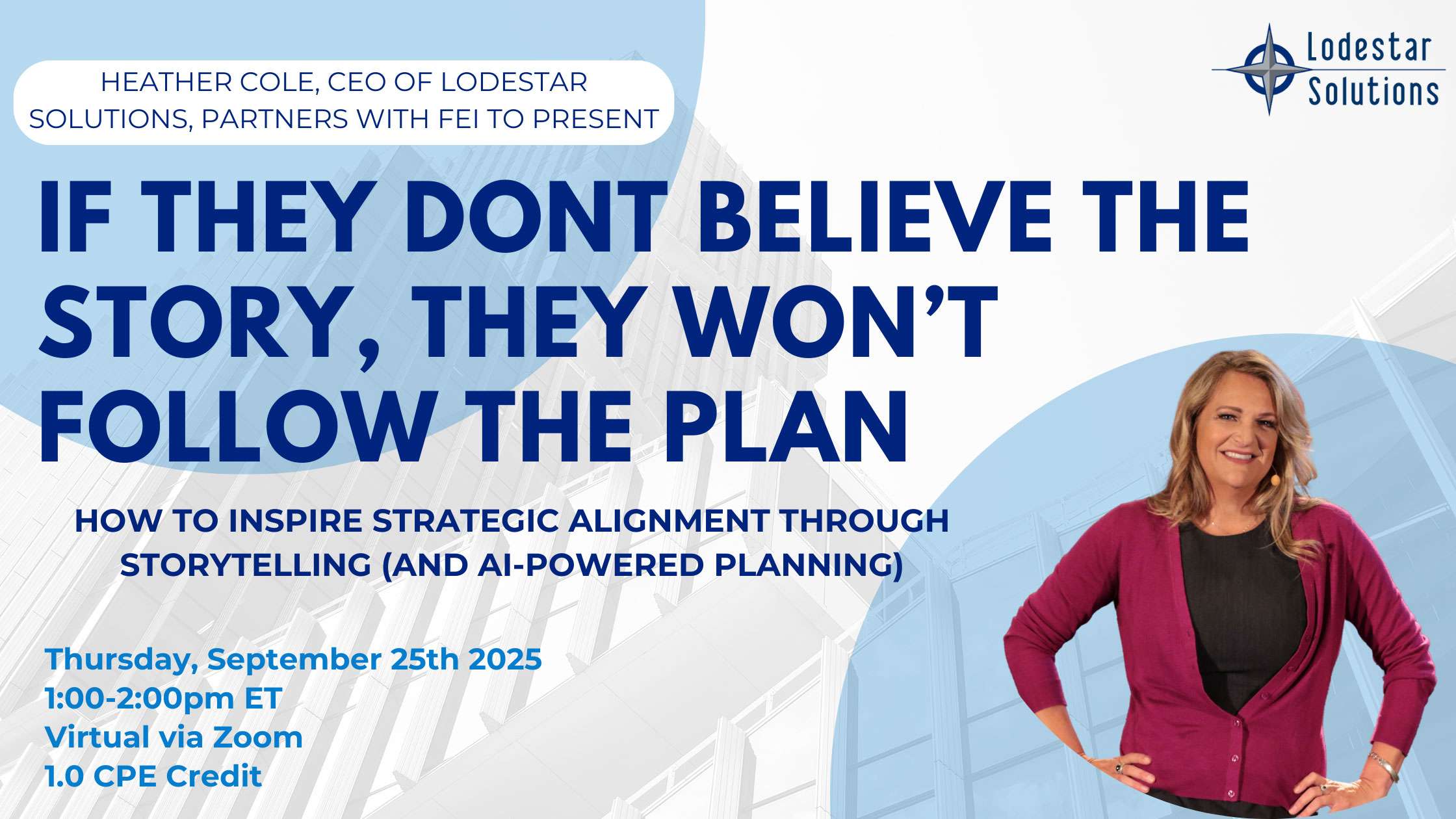
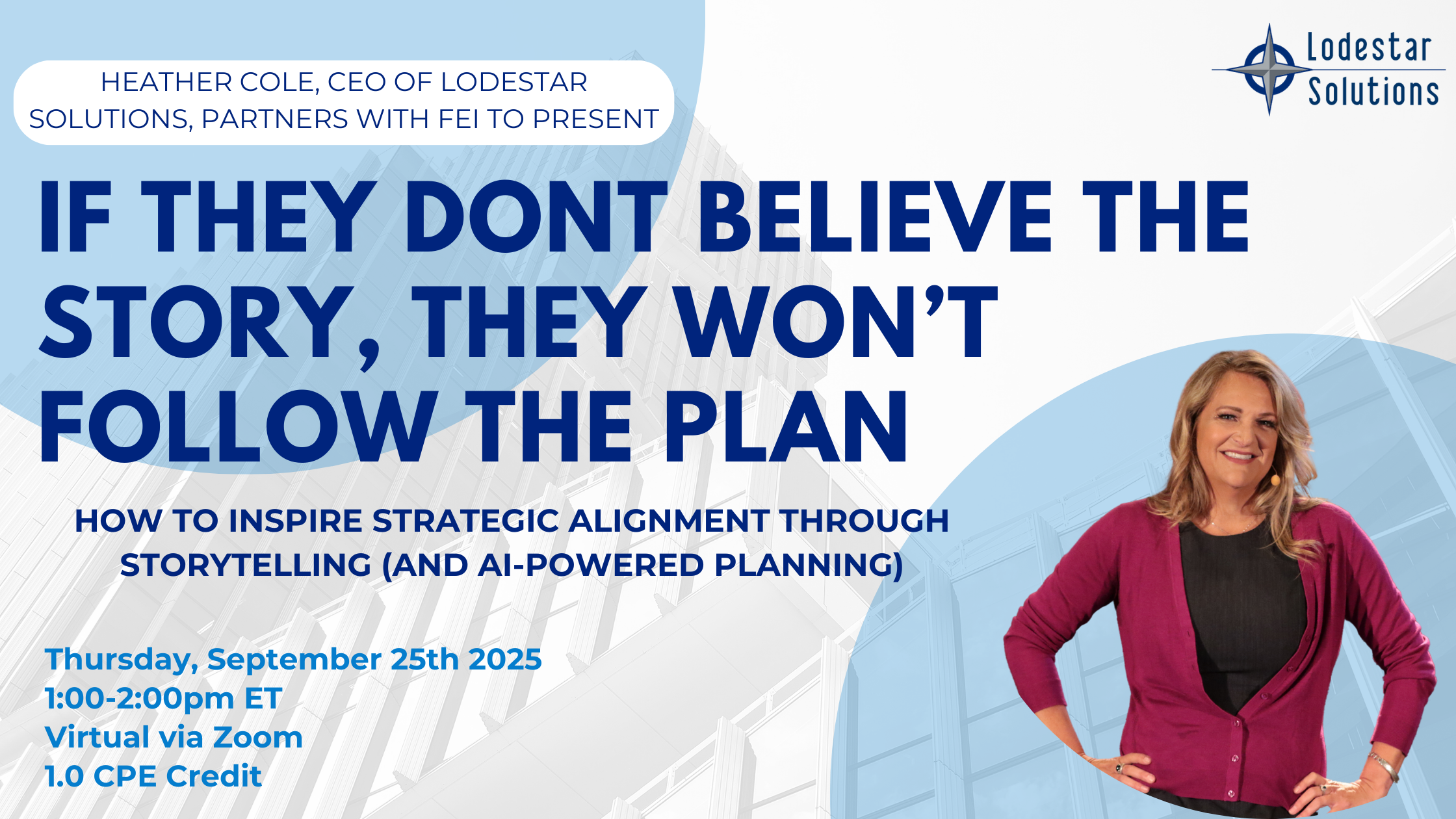
On Thursday, September 25, 2025 from 1:00–2:00 p.m. (ET), we’re hosting a fast-paced webinar for finance leaders and executive teams: “If They Don’t Believe the Story, They Won’t Follow the Plan.” You’ll learn:
- A repeatable framework to turn budgets into belief (and belief into execution)
- How to pick lead measures that move your lag results
- A simple, shareable narrative template your managers can use immediately
- Real-world examples from finance teams that aligned their organizations during budget season
If you’re ready to make this budget season the moment your company aligns around the why—and accelerates the how—save your seat now. (1.0 CPE Credit is Available) https://us02web.zoom.us/webinar/register/WN_ZgNYMdo6RJKJpZtPuXJ1JQ
Because when the story is clear, the plan is compelling—and execution follows.